
























Big Walk for Rocky River IBA
May 26, 2007
|
Thank you to the following sponsors who donated
$100 or more to the McDonalds/GLC Enterprizes |
|
| Story & Species list | Photos Pictures courtesy of Mary Anne Romito & Dave Lewis |
|
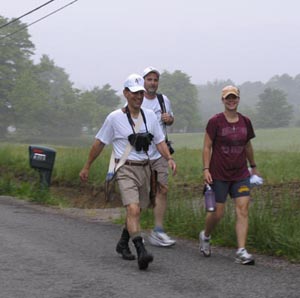
Some people will go to any lengths to promote their local Important Bird Area (IBA. Western Cuyahoga Audubon Society (WCAS) member Stan Searles decided the best way to do this was to walk the entire length of the IBA from Hinckley, Ohio, north to Lake Erie. The 31-mile route follows the Rocky River through both private lands and the Cleveland Metroparks. Stan, who is Curator of Birds for the Cleveland Metroparks Zoo, took it upon himself to do this on May 26. Stan’s daughter Katie Genoviso and WCAS President Tom Romito joined him for the walk. Beginning at 6:00 a.m., they completed the walk footsore but happy at 5:30 p.m. Several other people provided support along the entire. During the event, the walkers encountered residents, hikers, and bikers and other people just enjoying the watershed. The encounters became opportunities for the Audubonners to explain the IBA project. Stan conceived the walk as a way to draw public attention to the IBA. “There is no better way to educate people about the IBA than to meet them personally and talk to them,” he said. In 2006, WCAS began a five-year project to collect data on bird populations in the Rocky River watershed. The chapter partnered with Cleveland Metroparks (CMP) to identify points on the ground throughout the watershed and conduct point counts at those locations. About 50 chapter supporters and friends are participating in the project, some as point finders, point counters, recorders, data enterers, and data base specialists. In 2007, WCAS is adding more points, conducting vegetation surveys at selected points, and conducting vernal pool surveys.
CMP will use the data to help influence land stewardship in the watershed to protect birds and their habitat. WCAS plans to share the information with local governments (townships and cities) and private landholders in the watershed in order to advocate wise land use planning and zoning to reduce stormwater runoff into the Rocky River. The outcome of this collaboration will be to protect forest habitats for birds and other wildlife and enhance quality of life for citizens in the watershed.
|
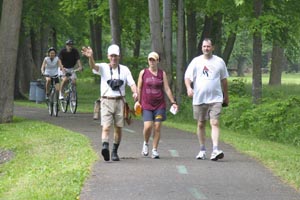 IBA walkers (left to right) Tom Romito, Katie Genoviso, and Stan Searles march up the all-purpose trail through the Rocky River IBA. |
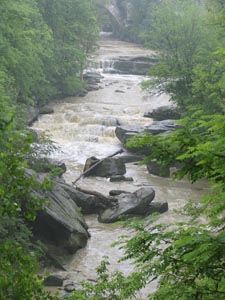 This view of the Rocky River Gorge is a typical view of habitat in the Rocky River IBA near Cleveland, Ohio. |
|
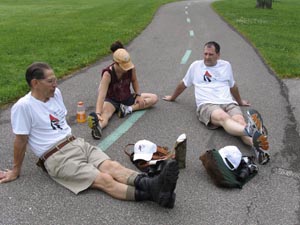 IBA walkers Tom Romito, Katie Genoviso, and Stan Searles take a break along the 31-mile IBA route. |
|
| Theses species were seen or heard by the
walkers and/or the support crew. Canada Goose |
|
|
|
|
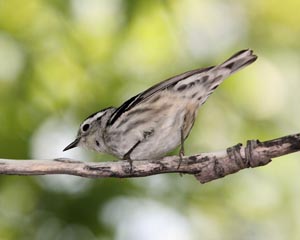 Black & White Warbler © Dave Lewis |
|
.jpg) Magnolia Warbler © Dave Lewis |
|